
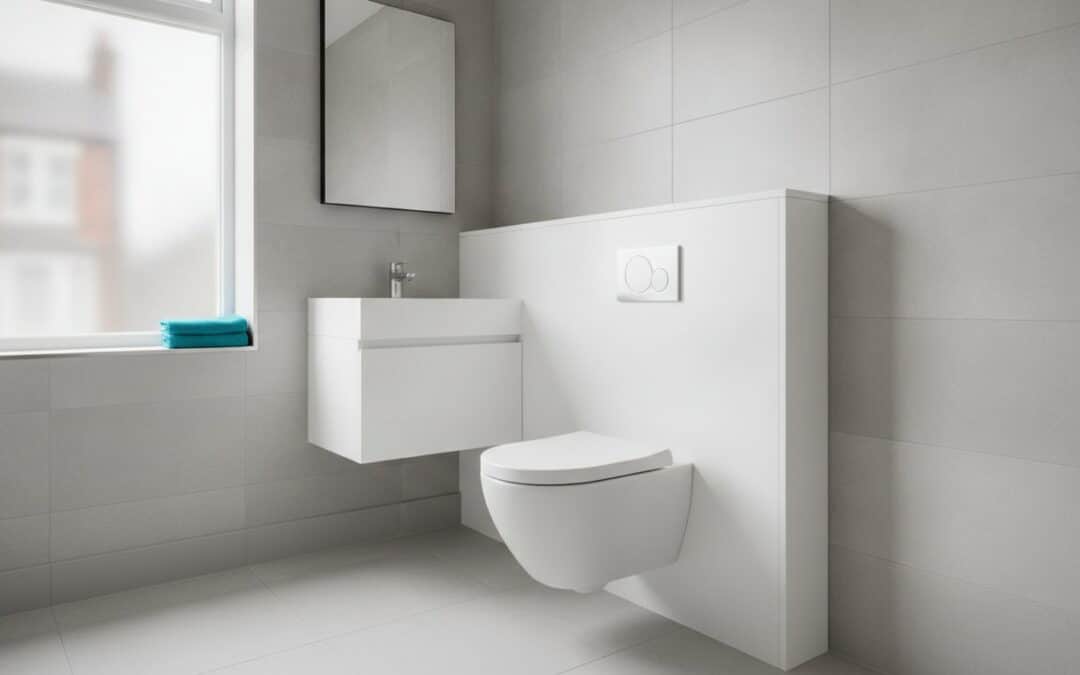
Why invest in a premium suite if the first thing you notice is a tangle of copper pipes and dust-covered plastic? Most homeowners find that exposed pipes ruin the aesthetic of an otherwise perfect room. Many people also hesitate to cover them because they fear blocking vital plumbing access. When it comes to boxing in pipework in bathroom Leicester projects, the goal isn’t just to hide the clutter; it’s to create a professional, seamless finish that lasts.
It’s frustrating to scrub around awkward corners where grime builds up. We know you want a sleek space that’s easy to maintain. You also need peace of mind that a leak won’t require a sledgehammer to fix. This guide shows you how expert joinery transforms your bathroom into a clean, modern sanctuary. You’ll learn about the best moisture-resistant materials and how to incorporate clever access panels so your plumbing remains reachable for any future repairs.
Key Takeaways
- Discover how custom timber frames eliminate unhygienic dust traps behind exposed pipes for a cleaner, modern bathroom.
- Learn why choosing moisture-resistant (MR) materials is essential for preventing structural damage and warping in humid spaces.
- Ensure your plumbing remains accessible by using professional magnetic or hinged access panels for stopcocks and valves.
- Explore how expert boxing in pipework in bathroom Leicester services allows for seamless tiling and perfect integration with your existing skirting.
- Understand the value of bespoke joinery in achieving a durable, high-end finish that standard DIY solutions cannot match.
Why Boxing in Pipework is Essential for a Modern Leicester Bathroom
Pipe boxing is a custom-built timber frame used to conceal plumbing, creating a neat finish that hides copper pipes, waste lines, and valves. For many homeowners, boxing in pipework in bathroom Leicester projects is the final touch that turns a cluttered utility space into a polished retreat. Whilst some general builders might use basic plywood offcuts, professional joinery ensures the structure is durable and perfectly aligned with your room’s dimensions. This technique is essentially a specialised architectural soffit, designed to blend with the walls rather than looking like a clumsy afterthought.
The difference between standard boxing and bespoke joinery is found in the precision. Standard kits often leave gaps or use flimsy materials that warp. A bespoke frame is built to handle the weight of tiles or the expansion of wood in humid conditions. It creates a seamless transition that looks like part of the original wall. Precision is key. It signals quality to anyone entering the room.
Eliminating Grime and Improving Bathroom Hygiene
Exposed pipes are notorious for collecting condensation and mould in damp bathroom environments. These dust traps are incredibly difficult to clean, often requiring you to scrub behind narrow gaps where grime accumulates over years. By installing a flush, sealed surface, you eliminate these hard-to-reach areas entirely. Cleaning becomes a simple matter of wiping down a flat surface rather than navigating intricate pipework. Pipe boxing is the ultimate solution for a low-maintenance bathroom.
Enhancing Property Value in Leicestershire
Potential buyers in Leicester increasingly look for integrated bathroom designs where every element feels intentional. In the city’s many Victorian terraces and Edwardian semi-detached homes, unsightly soil stacks often run down the corner of the room, looking bulky and out of place. Professional woodwork hides these features, making the room feel larger and more expensive. Bespoke boxing offers a superior finish compared to standard plastic alternatives or rough DIY attempts. It allows for the precise integration of skirting boards and architraves, ensuring the new structure feels like a permanent part of the house’s architecture. This level of detail signals to buyers that the property has been maintained to a high standard, directly impacting the perceived value of your home.
Professional Materials and Methods for Moisture-Rich Environments
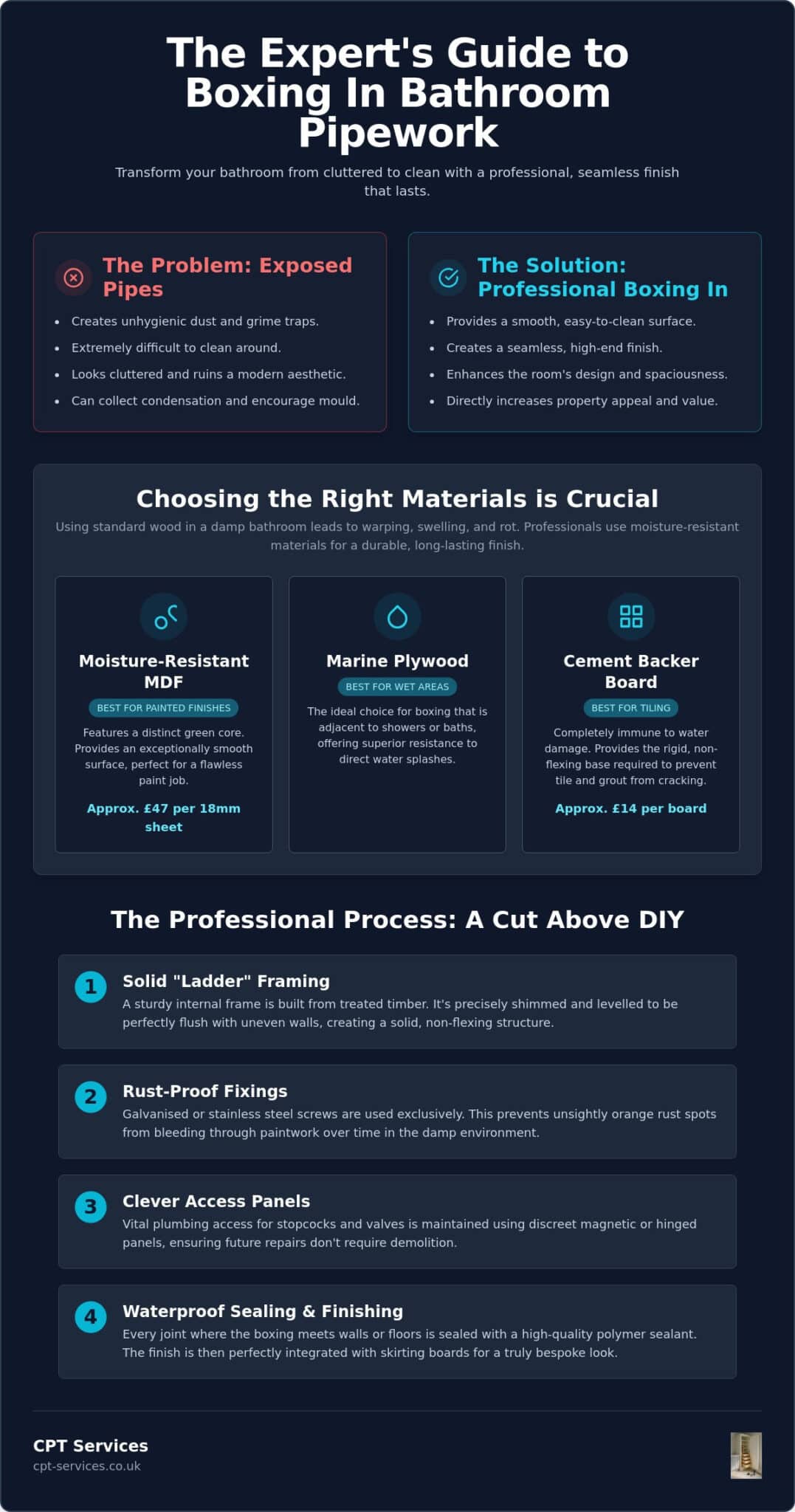
Using the wrong wood in a bathroom is a common DIY mistake that leads to costly repairs. Standard MDF or plywood absorbs moisture like a sponge. It swells, warps, and rots within months of installation. For professional boxing in pipework in bathroom Leicester, we always prioritise Moisture Resistant (MR) materials. These are specifically engineered to withstand high humidity without losing their structural integrity. Selecting the right board depends on your final finish, whether you plan to paint or tile the surface.
Choosing Between MR-MDF and Marine Plywood
MR-MDF is the industry standard for a painted finish. You can easily identify it by its distinct green core. As of July 2026, a 12mm sheet of MR-MDF costs approximately £38.56, whilst the thicker 18mm variant is priced around £47.12. It provides an exceptionally smooth surface that takes paint beautifully. Marine Plywood is a better choice for areas prone to direct water splashes, such as boxing that runs alongside a shower tray. If you intend to tile over the pipes, we recommend cement-based tile backer boards. A 12mm HardieBacker board currently costs about £13.82 including VAT. These boards are immune to water damage and provide the rigid, non-flexing base that tiles require to prevent grout cracking.
Framing Techniques for a Seamless Finish
A durable finish depends on the internal skeleton. We build a “ladder frame” using treated timber to create a sturdy, non-flexing structure. It’s vital to ensure the frame is perfectly level and plumb. Many older Leicestershire homes have uneven masonry, so we spend time shimming the frame for a flush fit against the wall. We use galvanised or stainless steel fixings throughout. Standard screws often rust in damp conditions, which leads to unsightly orange spots bleeding through your finished paintwork.
All work must comply with UK Building Regulations for drainage. This ensures soil pipes are properly ventilated and the structure doesn’t interfere with the home’s plumbing mechanics. Sealing every joint is the final step. We use high-quality polymer sealants to close gaps where the boxing meets the floor or walls. This prevents water from seeping behind the timber. If you’re unsure which material suits your layout, our team can help with bathroom installations that balance aesthetics with long-term durability.
Solving the Maintenance Dilemma: Access Panels and Removable Sections
Many homeowners worry that covering pipes means they won’t be able to reach them during a plumbing emergency. It’s a valid concern. Permanent boxing is a significant mistake for any area containing stopcocks, valves, or compression joints. If a pipe bursts or a seal fails, you shouldn’t have to demolish your bathroom to find the problem. For professional boxing in pipework in bathroom Leicester, we design every enclosure with the plumber in mind. We ensure every critical component remains accessible without compromising the sleek, integrated look of your room.
Following professional best practices for concealing pipework means balancing aesthetics with practical functionality. We often use removable “U-shaped” sections for long horizontal runs along the floor. These sections are built as a single unit that can be lifted away in seconds. For vertical soil stacks or corner boxing, we identify the most likely failure points based on the age of the plumbing. We then place access panels strategically so a professional can inspect the system without removing the entire timber frame. It’s about clever engineering rather than just covering things up.
The Importance of Hidden Access Points
In Leicester’s many Victorian terraces, stopcocks are often tucked away in awkward, low-level corners. We hide these using discreet magnetic tile hatches. These allow a single tile to sit flush with the rest of the wall, but it pops out easily when pressed. It’s vital that these panels are large enough for real-world use. A plumber needs sufficient space to use a wrench or replace a valve comfortably. We always future-proof the installation by positioning these hatches near joints and junctions where leaks are statistically most likely to occur over time.
Mechanical Fixings vs. Adhesive: Which is Better?
Some DIY guides suggest using high-strength grab adhesives for a “no-screw” look. We advise against this for bathroom pipework. Adhesive makes the boards permanent. This defeats the purpose of having access and often results in the timber being smashed if a repair is needed. CPT Services recommends concealed mechanical fixings for durability and ease of use. We use “push-fit” clips or hidden brackets. These allow panels to be removed and replaced dozens of times without damaging the timber or the paintwork. This method provides a far more professional finish than using plastic screw caps. Those caps often look cheap and the screws behind them can seize over time in damp bathroom air.
Design and Finishing: Matching Your Bathroom’s Aesthetic
A successful project shouldn’t look like a box has been stuck to the wall as an afterthought. It should feel like a natural extension of the room’s architecture. When we handle boxing in pipework in bathroom Leicester homes, the goal is to create a finish that is both functional and visually seamless. This involves more than just selecting a board; it requires careful consideration of how the new structure interacts with your tiles, paint, and existing woodwork. The right decorative choices turn a necessary cover-up into a design feature that enhances the entire space.
Tiling Over Pipe Boxing for a Continuous Look
If your bathroom is fully tiled, you’ll likely want the boxing to match. We recommend using cement-based tile backer boards as your substrate rather than MDF. These boards provide a rigid, non-flexing surface that is essential for preventing grout from cracking over time. It is vital to use a high-quality flexible adhesive and grout. These materials accommodate the slight natural movements that occur in any timber-framed structure. For a truly professional corner finish, we prefer mitred edges where the tiles meet. If that isn’t possible due to the tile type, a colour-matched metal or PVC trim provides a clean, modern edge that protects the tiles from chipping.
Decorative Skirting and Architrave Integration
One of the most effective ways to make boxing look “built-in” is to wrap your skirting boards around the base of the structure. This simple detail anchors the boxing to the room. In many older Leicester properties, we see traditional Ogee or Torus profiles. We take pride in matching these period styles exactly so the new work doesn’t clash with the original features of the house. If the boxing runs near a doorway, we also ensure it integrates correctly with the door frame. You can find more detail on achieving these high-end woodwork finishes in our guide on skirting and architrave fitting.
You can also use boxing to add functionality to the room. If the pipework allows, we can design the structure to include recessed alcoves or “niches.” These provide perfect storage spots for shampoo bottles or decorative items without taking up extra floor space. For the final finish, we recommend using a durable, wipe-clean paint such as a high-quality eggshell or satinwood. These finishes resist the steam and splashes common in busy family bathrooms. If you want a sleek, easy-to-clean sanctuary, request a quote for your bathroom joinery today. We specialise in boxing in pipework in bathroom Leicester projects that balance smart design with long-term durability.
Bespoke Pipe Boxing Services by CPT Services in Leicester
Achieving a seamless finish requires more than just basic carpentry. It demands a deep understanding of how timber behaves in high-moisture environments. At CPT Services, we provide expert boxing in pipework in bathroom Leicester homeowners can trust for long-term durability. Our team brings local expertise to every project across Leicester, Loughborough, and Hinckley. We focus on precision and cleanliness. This ensures that your new bathroom features blend perfectly with your home’s existing character.
Why Choose a Professional Joiner for Your Bathroom?
A general builder might offer a standard “boxed-in” look using whatever materials are on hand. This often results in bulky, awkward structures that feel like an obstruction. A specialist joiner approaches the task differently. We treat pipe boxing as a piece of bespoke cabinetry. This ensures the structure is not only visually appealing but also structurally sound. This is particularly important if you plan to use heavy stone or porcelain tiles. A flimsy frame will flex. That leads to popped tiles and failing grout. You can see how we integrate these professional finishes into our complete bathroom installations by viewing our project gallery.
Our Process: From Consultation to Completion
We’ve refined our workflow to minimise disruption whilst delivering a superior result. We understand the specific requirements for boxing in pipework in bathroom Leicester projects, from modern apartments to traditional terraces. Every project follows a clear, three-step path to ensure your satisfaction.
- Step 1: Assessment. We visit your home to measure the space and assess the plumbing layout. We identify stopcocks and valves that require access panels.
- Step 2: Preparation. We select the best moisture-resistant materials for your specific needs. Much of the preparation happens off-site to reduce the mess in your home.
- Step 3: Fitting. Our joiners install the frame and panels with millimetre precision. We ensure every joint is sealed and ready for your chosen decorative finish.
Our approach is grounded in honesty and quality execution. We don’t believe in flashy sales pitches or aggressive marketing. Instead, we let our workmanship speak for itself. We respect your time and your property, leaving every workspace clean and tidy once the job is done. If you’re ready to hide those pipes and create a sleek, sanctuary-like space, contact CPT Services for a free quote. We offer complimentary consultations to help you plan the perfect finish for your bathroom woodwork.
Transform Your Bathroom with Professional Joinery
A sleek, hygienic bathroom depends on the details. By choosing the right moisture-resistant materials and planning for maintenance access, you can hide unsightly pipes without creating future headaches. Professional boxing in pipework in bathroom Leicester projects ensures that your finish remains seamless; whether you’re matching period skirting or creating a flush surface for tiling. It’s about more than just a cover-up. It’s about building a durable, easy-to-clean space that adds genuine value to your home.
CPT Services brings over 10 years of carpentry experience in Leicestershire to every project. We specialise in bespoke moisture-resistant joinery that stands up to the damp conditions of a busy bathroom. We understand that every home is unique. We take pride in delivering honest, high-quality workmanship that respects your property. We offer complimentary local consultations and quotes to help you get started on your renovation without any pressure.
Book your free bathroom joinery consultation with CPT Services today. We look forward to helping you create the sleek, sanctuary-like bathroom you deserve.
Frequently Asked Questions
Can I box in pipes myself or should I hire a professional in Leicester?
You can certainly attempt this as a DIY project if you have the correct tools and experience with timber framing. However, hiring a professional ensures a level, flush finish that integrates perfectly with your existing skirting and architraves. A specialist joiner understands how to handle the complex plumbing layouts often found in local Victorian terraces or modern homes, ensuring the structure is both beautiful and durable.
What is the best material for boxing in pipes in a damp bathroom?
Moisture-resistant (MR) MDF and cement-based tile backer boards are the best materials for this environment. You should avoid using standard MDF or basic plywood as these materials absorb humidity and will swell or rot within a few months. MR-MDF provides a smooth surface for painting, whilst tile backer boards offer the rigid, waterproof base needed for a tiled finish.
How do I ensure I can still reach my stopcock if I box it in?
You must incorporate a removable access panel or a discreet magnetic tile hatch into the design. It’s a mistake to seal a stopcock or any major valve behind permanent boxing. We ensure these panels are large enough for a plumber to actually work through, so you can shut off your water quickly in an emergency without damaging your woodwork.
Is it possible to tile directly over the pipe boxing?
Yes, tiling over boxing is a great way to achieve a continuous, integrated look. For the best results, you should use cement backer boards instead of timber as your substrate. Always use a high-quality flexible adhesive and grout. These materials are designed to absorb the minor movements that occur in timber-framed structures, preventing your grout lines from cracking over time.
Will boxing in my pipes cause them to sweat or freeze?
Boxing usually protects pipes from freezing by adding an extra layer of insulation from the cold air. However, condensation or “sweating” can still occur on cold water pipes inside the void. We recommend lagging your pipes with foam insulation before the boxing is installed. This simple step prevents moisture from building up inside the timber frame and protects the structure from damp.
How much does professional pipe boxing cost in the Leicester area?
The cost for boxing in pipework in bathroom Leicester projects varies depending on the length of the run and the complexity of the finish. Most local carpenters will provide a fixed quote for the entire project rather than an hourly rate. This approach ensures you know the total cost upfront for a bespoke joinery finish that fits your specific bathroom layout.
Can pipe boxing be used to create extra storage or shelving?
Custom boxing is an excellent solution for adding functional storage to a small room. We can design the frame to include recessed alcoves or “niches” for shampoo bottles and toiletries. This turns a necessary structural element into a stylish design feature, helping you keep your bathroom surfaces clear and easy to clean.
How long does it typically take to box in bathroom pipework?
A standard run of pipe boxing typically takes one to two days to frame and fit. This timeframe allows for precision measuring and on-site assembly of the timber skeleton and boards. You should factor in additional time for finishing touches such as painting, tiling, or grouting, as these require specific drying periods between coats.