

The most expensive bespoke cabinets in the world won’t matter if they’re installed on an uneven floor that causes the doors to drop within six months. Most homeowners start their project by looking at colour palettes and stone worktops, but the real success of a project lies beneath the surface. We know that the fear of overspending or hiring an unreliable builder can make the process feel incredibly daunting. It’s completely normal to feel anxious about structural issues or material quality when you’re investing a significant amount into your home.
This guide is designed to help you by avoiding kitchen renovation mistakes that often plague even the most well-planned projects. You’ll discover how to sidestep costly installation errors and structural pitfalls to ensure your kitchen is both beautiful and built to last. We’ll walk you through the importance of proper floor preparation, the latest 2026 building regulations for ventilation, and how to spot a professional who values precision over a quick sale. By the end, you’ll have a clear roadmap for creating a durable, functional space that serves your family for years to come.
Key Takeaways
- Learn why planning modern “zones” and checking door swing clearances is essential for a functional, frustration-free kitchen.
- Understand the structural requirements for heavy stone worktops, including reinforcing floor joists and performing a proper subfloor level check.
- Compare the durability of solid wood and MDF carcasses to ensure your kitchen withstands the weight of daily use without warping.
- Gain peace of mind by avoiding kitchen renovation mistakes through a professional datum line survey and specialist carpentry.
Common Layout and Clearance Mistakes That Ruin Functionality
A beautiful kitchen is useless if it is frustrating to use. Many homeowners spend weeks choosing the perfect cabinet colour but only minutes thinking about how they move between the fridge and the hob. Avoiding kitchen renovation mistakes starts with a layout that respects the physical reality of your room. If you overlook clearance zones, you will end up with a space where doors clash and walkways feel cramped. Precision in the planning stage prevents these daily annoyances from becoming permanent fixtures in your home.
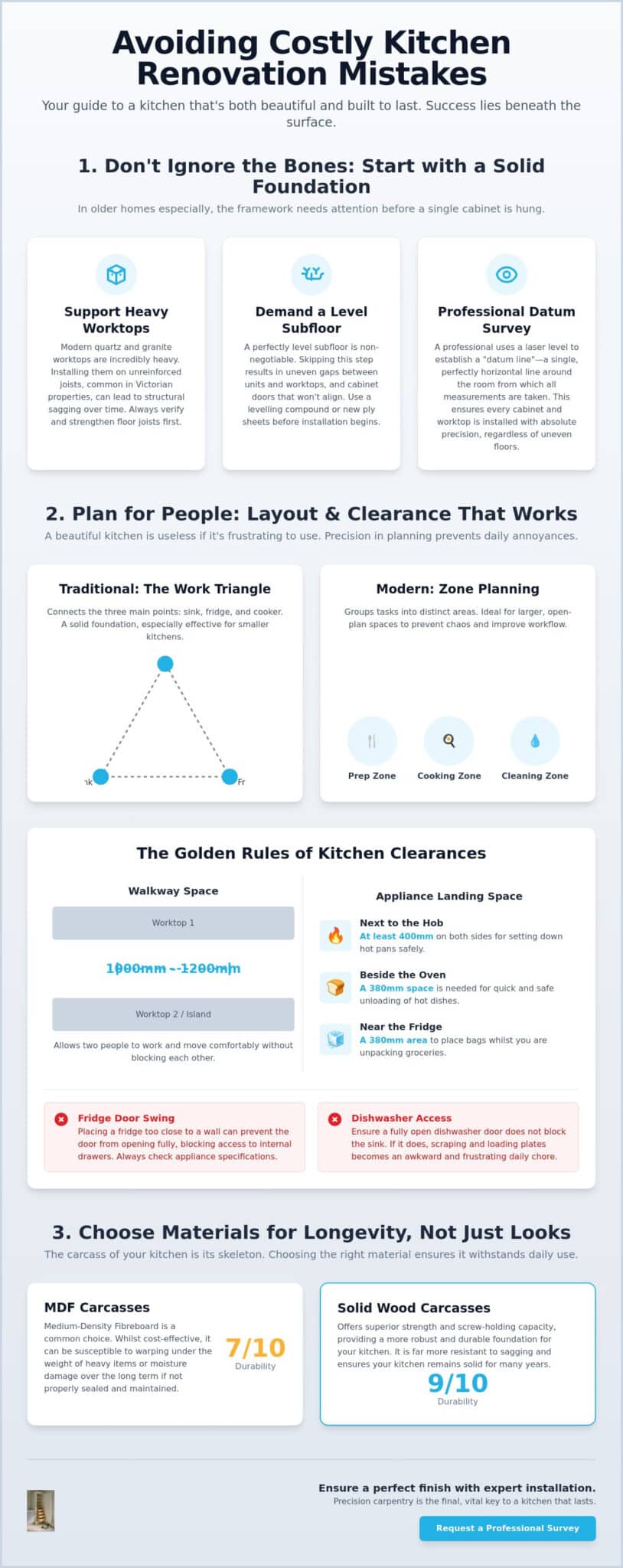
Traditionally, designers relied on the kitchen work triangle principle to map out the distance between the sink, fridge, and cooker. This remains a solid foundation for smaller Leicestershire kitchens where space is at a premium. However, larger open-plan spaces often benefit from “zone planning.” This involves grouping tasks like food prep, cooking, and cleaning into distinct areas. Without clear zones, you risk creating a chaotic environment where family members constantly bump into each other whilst trying to complete different tasks.
One of the most frequent errors is neglecting landing spaces. You need clear worktop areas next to your main appliances to ensure safety and efficiency. Consider these minimums during your design phase:
- Next to the hob: At least 400mm on both sides for setting down hot pans.
- Beside the oven: A 380mm space for quick, safe unloading.
- Near the fridge: A 380mm area to place bags whilst you are unpacking groceries.
Integrated appliances also have specific door swing requirements. If you place a fridge-freezer too close to a wall, the door might not open wide enough to pull out the internal drawers. This is a common oversight that can lead to significant frustration after the installation is finished.
The Golden Rules of Kitchen Clearances
Precision is vital for a comfortable room. You should aim for 1000mm to 1200mm of space between parallel work surfaces. This allows two people to work in the kitchen without blocking each other. In narrow galley layouts, don’t forget to account for handle depths. A 30mm handle on both sides can turn a comfortable 900mm gap into a tight squeeze. Always ensure that a fully open dishwasher door does not block access to the sink; otherwise, scraping and loading plates becomes a difficult chore.
Designing for Real-Life Traffic Flow
Identify potential bottlenecks before you commit to a design. In open-plan homes, the kitchen is often a thoroughfare. Ensure your island doesn’t block the natural path to the garden or lounge. Organise storage based on how often items are used amongst your family. Keep everyday plates at eye level and heavy mixers in lower pull-out drawers. A simple but vital tip is to keep the bin near the food prep area. Walking across the room with dripping vegetable peelings is a recipe for a messy floor and a wasted effort.
Ignoring the Bones: Structural and Foundational Errors
Many homeowners focus on the finish and forget the framework. In a city like Leicester, where many properties are Victorian or Edwardian, the “bones” of the house often need attention before a single cabinet is hung. Avoiding kitchen renovation mistakes means looking under the floorboards and behind the plaster. If you ignore these hidden elements, you risk your new kitchen sagging or warping within a few years. Precision starts from the ground up.
Heavy stone worktops are a major 2026 trend, but they weigh significantly more than laminate or wood. Installing a solid quartz or granite island on unreinforced Victorian joists is a recipe for structural trouble. You must also ensure the subfloor is perfectly level. Skipping this step leads to uneven gaps between units and worktops that never quite sit right. A professional survey will identify if your floor needs “levelling up” with a compound or new ply sheets before the installation begins. If you are unsure about your floor’s integrity, seeking professional advice on kitchen installation in Leicester can prevent costly future repairs.
Floor Joists and Structural Timber Repairs
Older homes in Leicester often hide issues like wood rot or undersized joists. If you notice a “bouncy” feel when walking across the room, it is vital to address this before laying new wooden flooring. You may require structural timber repairs to reinforce the area beneath heavy appliances or large islands. Strengthening these timbers now prevents the floor from dipping under the weight of your new kitchen units. It is much easier to fix a joist whilst the floor is up than after the cabinets are fixed in place.
Damp is another silent killer of new kitchens. You should check for moisture around external walls and old plumbing lines before the cabinets cover them up. Once the units are in, treating rot becomes an expensive nightmare. Similarly, few walls in Leicester are perfectly straight. A skilled carpenter uses “scribe” fitting to trim panels so they follow the exact contour of your wall. Without this, you will see unsightly gaps that no amount of filler can fix. This level of detail is what separates a professional fit from a DIY attempt.
Moisture Control and Ventilation
Proper extraction is more than just an electrical task; it is a carpentry priority. You need to ensure ducting is correctly routed through cabinetry without compromising its structural strength. Protecting MDF carcasses from water damage is also essential. We always recommend sealing the areas around the sink and dishwasher with specialist moisture barriers to prevent the boards from blowing. Finally, high-quality skirting and architrave fitting helps hide the necessary expansion gaps between your floor and the walls, ensuring a clean finish that allows the building to breathe.
Material Misjudgements: Aesthetics vs. Durability
Choosing materials based solely on a showroom photograph is a common pitfall. A kitchen must withstand heat, moisture, and heavy daily use. Avoiding kitchen renovation mistakes requires a balance between how a surface looks and how it performs under pressure. In a busy Leicestershire home, the “family test” is the only metric that truly matters. If a material cannot handle a spilled glass of red wine or a heavy cast-iron pan, it has no place in a hard-working kitchen.
The debate between solid wood and MDF often confuses homeowners. High-quality moisture-resistant MDF is actually superior for painted finishes because it does not expand and contract with temperature changes. However, there is a significant difference between premium furniture-grade boards and the “cheap” flat-pack carcasses found in budget retail outlets. Low-grade carcasses often warp under the weight of modern stone worktops. Investing in sturdy, well-constructed units ensures your kitchen remains level and functional for decades rather than years.
Worktop selection is another area where durability should lead the way. Whilst marble looks stunning, it is incredibly porous and stains easily. For most families, a “fit and forget” material like quartz or high-quality laminate is a far more practical choice. These materials offer the aesthetic of natural stone without the need for annual sealing or constant anxiety over lemon juice spills. Your choice of flooring should follow the same logic. It needs to handle high foot traffic without scratching or lifting at the seams.
Cabinetry Construction: What’s Inside Matters
The way your cabinets are built dictates their lifespan. Glued-and-doweled carcasses are assembled in a factory and offer far more rigidity than cam-and-pin flat packs. This structural integrity is vital when you are hanging heavy doors or installing integrated appliances. Don’t overlook the hardware either. High-quality hinges and soft-close mechanisms might seem like small details, but they prevent the constant slamming that eventually loosens screws and misaligns doors. Choosing bespoke units often allows for better space utilisation, especially in awkward corners where standard sizes leave wasted gaps.
Flooring and Finish Selection
A successful wooden flooring installation in a kitchen requires specific considerations, such as a moisture-stable underlay and the correct expansion gaps. Kitchens are high-humidity zones, so the material must be able to breathe without buckling. To achieve a seamless, professional look, you should match your skirting boards and architraves to the new cabinetry style. This creates a cohesive design that feels intentional. Finally, be wary of trendy, unsealed tiles. If a tile is too porous, it will absorb grease and grime, making it impossible to keep clean in a cooking environment.
The Pre-Installation Survey: A Step-by-Step Checklist
A common trap is assuming your kitchen walls are square and your floors are level. In reality, they almost never are. Avoiding kitchen renovation mistakes requires a rigorous pre-installation survey before any units are even ordered. While a designer creates a vision, a fitter deals with the hard reality of the room. This phase is where you identify the “datum line”, which is the highest point of your floor. If you set your cabinet height based on the lowest point, you might find your integrated appliances won’t fit under the worktop once you reach the other side of the room.
You must also map out existing plumbing and gas lines. Even if you aren’t moving your sink or hob, knowing exactly where pipes enter the room allows for precise cabinet “notching” and prevents accidental damage. Another vital check is verifying your appliance dimensions. Manufacturers sometimes update specifications without warning. Measuring the actual units in your home rather than relying on a brochure prevents the nightmare of a fridge-freezer that is 5mm too wide for its housing. Checking for wall squareness is equally important. If your walls aren’t at a true 90-degree angle, you will need to plan for specific “filler” or “scribe” pieces to ensure a professional finish.
Measuring Twice, Cutting Once
We recommend creating a 1:20 scale floor plan of your space. This allows you to visualise exactly how every cabinet and walkway fits. In older Leicestershire properties, “out-of-plumb” walls are the standard. A professional fitter will often perform a “dry fit” by placing the carcasses in position without fixing them. This allows us to see how the units interact with the walls and floor before any permanent cuts are made. It is a simple step that saves hours of corrective work later in the project.
Professional Coordination
Successful projects rely on a strict sequence of trades. You should bring in your carpenter early to oversee the kitchen fitting timeline. They will ensure the subfloor is dry and ready for finishes before the cabinets arrive. For example, plastering should always be finished and dry before wooden units are installed to prevent moisture absorption. Organising this flow prevents trades from tripping over each other and protects your new surfaces from damage. If you want to ensure your project runs smoothly from the start, consider booking a survey for professional kitchen installation in Leicester.
Why Expert Kitchen Installation in Leicester is the Final Key
You can have the best design in the world, but the installation makes or breaks the project. A general handyman might be able to assemble a cabinet, but they often lack the specialist tools and experience required for a complex kitchen fit. Avoiding kitchen renovation mistakes in the final stage means choosing a specialist who understands the nuances of cabinetry and structural timber. A professional kitchen fitter ensures that every unit is perfectly level, even when the floor beneath it is not. This precision is what keeps your doors from dropping and your worktops from cracking over time.
In Leicestershire, our local housing stock requires a specific set of skills. Many period homes in the area have walls that are anything but straight and floors that have settled over a century. A specialist fitter uses advanced carpentry techniques to scribe panels and adjust carcasses, ensuring a seamless finish that looks like it was built into the house. Whether we are working on a domestic refit or a large-scale commercial project, the goal remains the same: durability and quality. CPT Services brings years of local experience to every project, providing a level of craftsmanship that generalists simply cannot match.
The CPT Services Approach
We focus on high-quality finishes and functional, bespoke design. Our team doesn’t just put boxes on walls. We prioritise structural integrity alongside aesthetic appeal. As we discussed earlier, checking the “bones” of your home is vital. We help you avoid common “cowboy” pitfalls, such as rushed installations that skip the essential subfloor preparation or use poor-quality fixings. By taking the time to do the job correctly, we ensure your kitchen remains a functional asset for decades. Our reputation is built on clear communication and reliable execution.
Ready to Start Your Leicester Kitchen Project?
Every successful renovation begins with a thorough assessment of the space. We offer a complimentary consultation to discuss your vision and evaluate the technical requirements of your room. We work with your chosen materials, from solid wood to modern composites, to provide a professional finish that exceeds expectations. Our process is transparent and straightforward, respecting your time and your home. We handle everything from the initial survey to the final bit of skirting and architrave fitting.
Contact CPT Services for a professional kitchen installation quote in Leicester.
Secure the Future of Your Kitchen Project
A successful renovation is the result of careful planning and professional execution. We have explored how layout precision and structural integrity form the foundations of a functional room. Choosing durable materials over passing trends ensures your investment stands the test of time. Success ultimately depends on avoiding kitchen renovation mistakes through rigorous surveys and specialist fitting. When you prioritise the “bones” of the building, you create a space that remains beautiful and level for decades.
CPT Services brings over 12 years of local Leicestershire expertise to every home. We specialise in bespoke carpentry and essential structural repairs, providing a grounded and transparent service. Our team understands the specific challenges of period properties and modern refits alike. We are here to help you turn your vision into a durable reality with honest advice and skilled craftsmanship. Your dream kitchen is within reach when you choose quality from the very start.
Book your complimentary kitchen installation consultation with CPT Services today.
Frequently Asked Questions
How much does a kitchen renovation typically cost in Leicester for 2026?
The cost of a kitchen renovation in Leicester depends on the scale of your project and the quality of materials, such as quartz worktops or bespoke cabinetry. Industry experts generally suggest budgeting between 5% and 10% of your home’s total value for a full renovation. This ensures your investment remains proportionate to the property’s worth whilst allowing for high-quality installation and durable materials that will last for decades.
Can I keep my existing flooring during a kitchen refit?
You can keep your existing flooring, but it is rarely recommended during a full refit. New cabinet footprints often differ from the old ones, which can leave unsightly gaps or exposed subfloor. Additionally, if the new units are heavier, the existing floor may not be structurally prepared. It’s often better to lay new flooring after the carcasses are in place to ensure a perfect, seamless finish across the entire room.
How long does a professional kitchen installation usually take?
A professional kitchen installation usually takes between two and four weeks to complete. This timeline depends on the complexity of the project and whether you are moving plumbing or gas lines. Simple installations might be quicker, but bespoke projects involving structural repairs or stone worktop templating require more time. We always provide a clear schedule before starting work to ensure the process respects your time and home.
Do I need to hire a separate carpenter if I buy a flat-pack kitchen?
Hiring a specialist carpenter for a flat-pack kitchen is the best way of avoiding kitchen renovation mistakes that lead to a poor finish. While these units are mass-produced, your walls and floors are unique to your home. A carpenter will scribe the panels to fit your specific room contours and ensure everything is perfectly level. This prevents doors from hanging unevenly and ensures the worktops sit correctly for years to come.
What is the most common mistake people make in small kitchen layouts?
The most common mistake in small kitchen layouts is neglecting door and drawer clearances. People often focus on maximising storage but forget that a fridge door or dishwasher needs space to open fully without hitting another unit or blocking a walkway. In tight spaces, we recommend using the full height of the room with taller wall units and prioritising clear landing spaces to keep the kitchen functional and safe.
Is it worth repairing old floor joists before installing a new kitchen?
It is absolutely worth repairing old floor joists before you install a new kitchen. Modern kitchens, especially those with stone worktops or large islands, are significantly heavier than older designs. If your floor feels “bouncy”, it indicates that the timber may be failing or undersized. Addressing these structural issues now prevents the floor from sagging and ruining your new cabinetry or causing expensive structural damage later in the project.
What should I do if my kitchen walls are not straight?
If your kitchen walls are not straight, a professional fitter will use a technique called “scribing” to ensure a flush finish. This involves precisely trimming the side panels or filler pieces to follow the exact curve or slant of the wall. It is a standard part of our process when working in Leicestershire’s period homes. Without this level of precision, you will be left with large gaps that filler alone cannot hide.
Can CPT Services help with bespoke kitchen islands and wardrobes?
Yes, CPT Services specialises in both bespoke kitchen islands and custom wardrobes. We understand that standard off-the-shelf units don’t always fit the unique dimensions or character of your home. By choosing a bespoke approach, you can maximise your storage and create a focal point that is tailored to your lifestyle. We apply the same level of craftsmanship to every project, ensuring a professional and durable result regardless of the scale.