
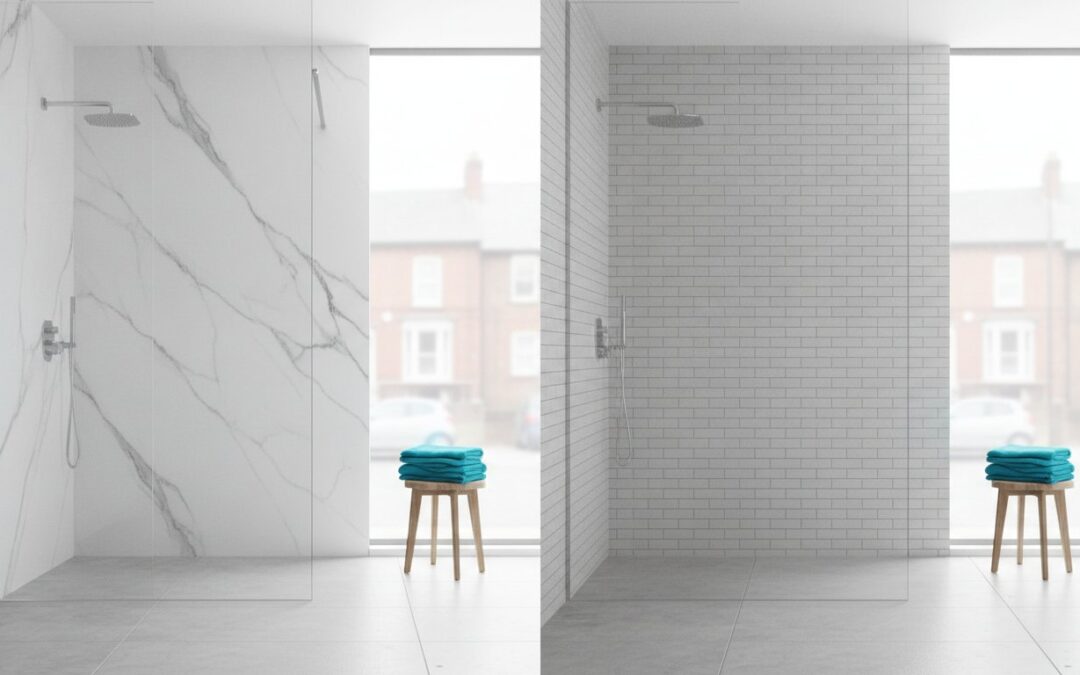
The material with the lowest price tag on the shelf often ends up being the most expensive choice once the final invoice arrives. When you’re planning a renovation in Leicestershire, understanding the true cost to install shower panels vs tiles involves looking far beyond the initial shop receipt. You might feel overwhelmed by conflicting quotes from different tradespeople or worry about how much time a busy family bathroom will be out of action. It’s a common frustration for homeowners who want a high-quality finish without the long-term headache of scrubbing grout mould every weekend. Choosing the wrong material can lead to maintenance cycles that drain your time and your budget.
We know you want a bathroom that stays looking fresh for years, not just for the first few months. This guide will help you discover the true cost differences between shower panels and tiling so you can choose the best value for your specific home. We’ll preview the installation timelines for both options and compare the durability of modern materials against traditional ceramics. You will also learn why the condition of your existing walls often dictates the total project cost more than the materials themselves, giving you the confidence to book a local Leicester fitter with total clarity.
Key Takeaways
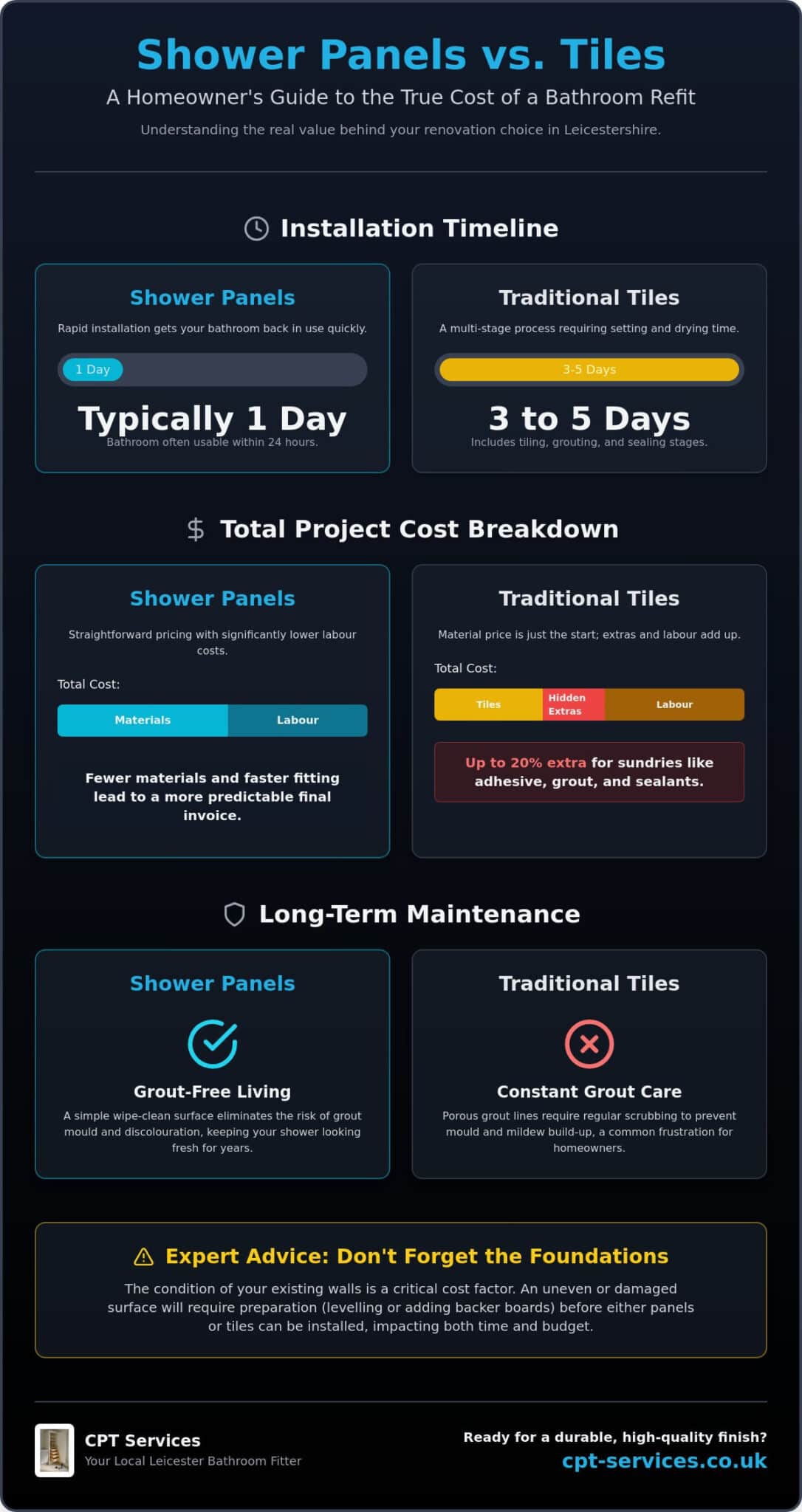
- Understand how hidden extras like adhesive and grout can add up to 20% to your tiling budget compared to the straightforward pricing of waterproof panels.
- Compare the total cost to install shower panels vs tiles by factoring in the significantly reduced labour time required for panel systems.
- Discover why panel installations are often completed in a single day, whilst traditional tiling typically requires a three to five-day commitment.
- Learn how to eliminate the risk of grout mould and reduce long-term maintenance by opting for modern, wipe-clean surfaces.
- Get expert advice on choosing the right material for your specific Leicester property to ensure a durable and high-quality finish.
Shower Panels vs Tiles: Calculating the Real Cost of Your Bathroom Refit
Choosing between a sleek panel system and traditional tiling is one of the biggest decisions you’ll face during a bathroom refit. Whilst both options provide a waterproof seal, they represent two very different approaches to home renovation. When you calculate the cost to install shower panels vs tiles, you have to account for more than just the surface material. You are paying for the time of a skilled professional, the specialised adhesives required, and the structural preparation of your walls. In 2026, we have noticed a significant shift amongst Leicestershire homeowners towards grout-free living. People are tired of the constant battle with mould and are looking for solutions that last without the scrubbing. They want a bathroom that looks as good in five years as it does on the day of installation.
What are Shower Wall Panels?
Modern shower panels are large, waterproof sheets designed to cover entire walls with minimal joins. They are typically constructed from high-grade PVC, solid acrylic, or a moisture-resistant MDF core with a high-pressure laminate face. Because these panels are large-format, they eliminate the need for dozens of grout lines. This makes them a popular choice for those who want a clean, contemporary look. You can now find panels in various finishes, including realistic stone textures and tile-effect patterns that mimic the look of traditional ceramics. They are particularly useful for covering old tiles if the existing surface is sound, which can save you a significant amount in removal costs.
The Timeless Appeal of Bathroom Tiling
Tiles remain the gold standard for high-end, bespoke bathroom aesthetics. Whether you prefer ceramic, porcelain, or natural stone, the sheer variety of colours and patterns allows for a truly unique design. Tiling is particularly effective in older Leicester properties where walls might not be perfectly square. Small tiles can be adjusted to follow the contours of an awkward space or a sloping ceiling. Developments in shower construction and materials have made tiles more durable than ever, though they still require a higher level of craftsmanship and more time to install correctly. This versatility is why tiles are still favoured for luxury projects where the budget allows for a longer installation period.
The core trade-off comes down to speed and simplicity versus bespoke design and long-term durability. Panels offer a rapid turnaround, often allowing a bathroom to be back in use within 24 hours. Tiles take longer, but they offer a tactile quality and a sense of permanence that many homeowners still value. When calculating the total budget, remember that tiling involves extra costs for sundries that aren’t always obvious at first glance:
- Specialist adhesives: High-bond formulas required for heavy porcelain or natural stone.
- Grout and spacers: Essential components for a uniform and waterproof finish.
- Sealants: Premium anti-fungal silicones for corners, joints, and edges.
- Backer boards: Necessary for providing a stable, waterproof substrate in wet areas.
These incidental items often add 15 to 20% to a tiling budget, whereas panels usually require only adhesive and colour-matched trims. Understanding the real cost to install shower panels vs tiles requires looking at the condition of your existing walls. If your substrate is uneven, a professional fitter will need to level the surface before any material is applied. These preparation steps are vital for a leak-free finish that stands the test of time in a busy family home.
Breaking Down the Material Costs: High-End Tiles vs Modern Waterproof Panels
Calculating the material budget for a bathroom refit is rarely as simple as looking at the price of a single box of tiles or one wall panel. When comparing the cost to install shower panels vs tiles, the initial purchase price of the surface material is only the starting point. High-end tiles might appear reasonably priced per square metre, but the total cost often climbs once you include the high-performance adhesives required for large-format porcelain or natural stone. In contrast, premium acrylic panels have a higher upfront cost but require far fewer installation accessories. Budget PVC panels are available for those prioritising speed, though solid-core or acrylic options offer a more durable finish that better resists the wear and tear of a busy family home.
The ‘Extras’ You Haven’t Budgeted For
Many homeowners focus on the visible finish and forget the essential components that hold the system together. For a tiled shower, you must account for tile spacers, anti-fungal grout, and high-flex adhesive, which typically add 15 to 20% to your material spend. Large tiles are particularly demanding; they often require specialist flexible adhesives to prevent cracking as the building naturally moves. When comparing shower panels and tiles, the list of essentials for panels is much shorter:
- Internal and external corner trims: These ensure a watertight, professional finish at every join.
- Joining strips: Necessary for wider walls where two panels must meet seamlessly.
- Specialist sealant: High-modulus silicone designed specifically for the expansion and contraction of panel systems.
Substrate Preparation: The Hidden Price Factor
The condition of your walls is the biggest variable when determining the final cost to install shower panels vs tiles. Tiles require a perfectly flat and “tanked” surface. This means the walls must be waterproofed with a specialist membrane or liquid system before the first tile is laid. In many of Leicester’s older Victorian properties, walls are rarely straight or plumb. Correcting these structural issues for a tiled finish can involve significant plastering or the installation of cement backer boards. These steps are vital to prevent future leaks but they do add to the labour and material totals.
Shower panels are more forgiving. Because they are rigid, they can often be fitted directly over existing tiles or onto slightly uneven walls. This eliminates the labour-intensive “strip-out” phase, saving you both time and money on waste disposal. If you are unsure about the structural integrity of your current bathroom, our team can provide a professional assessment to see which material suits your property’s unique character. By choosing the right material for your specific wall condition, you can avoid unexpected costs that only appear once the old bathroom is removed.
Labour and Installation: Why Panels Often Win on Speed and Price
In the East Midlands, the cost to install shower panels vs tiles is heavily influenced by the time a tradesperson spends on-site. Most skilled fitters in Leicestershire work on a project rate, which is calculated based on the number of days a job will take. A standard shower enclosure can often be fitted with panels in a single working day. In contrast, traditional tiling for the same area typically requires three to five days. This difference in duration directly impacts your final invoice. Whilst the day rate for a skilled professional remains consistent, the extended timeline for tiling means you are paying for significantly more labour hours.
The discrepancy in time isn’t just about the speed of the worker; it is built into the materials themselves. Tiles require a multi-stage process with mandatory drying times between each step. You cannot grout a wall until the adhesive has fully cured, which usually takes 24 hours. Panels do not have this restriction. A multi-skilled joiner can cut, fit, and seal a panel system in one continuous visit. This efficiency makes panels an attractive option for busy households where having a bathroom out of commission for a week is not practical.
The Tiling Timeline: Why It Costs More in Labour
Tiling is a meticulous craft that involves priming the walls, setting out the pattern, and carefully cutting pieces to fit. The process becomes even more complex when working around shower valves, pipework, and recessed storage niches. Each cut must be precise to ensure the grout lines remain uniform. Because of this complexity, it is vital to use professional bathroom installations to ensure the finished result is completely leak-proof. A single poorly placed tile or a gap in the grout can lead to structural damp issues behind the wall, which are expensive to repair.
Panel Installation: Efficiency Without Compromise
Panel systems use a “cut and stick” method that allows for rapid coverage of large wall areas. Because a single panel can cover up to 1200mm in width, the number of individual components to handle is minimal. This reduces the labour cost per square metre significantly. Panels are typically cut using standard joinery tools, which creates less mess and dust than wet-cutting ceramic or stone tiles. This streamlined approach allows the fitter to focus on the critical sealing of joins and trims, ensuring a robust and waterproof finish without the extended timeline of traditional masonry work.
Choosing panels also allows for more flexibility in who carries out the work. Whilst tiling is a specialist trade, high-quality wall panels are often installed by experienced joiners who are already on-site for other tasks. This versatility can sometimes result in a more competitive quote for the overall project, as you may not need to bring in a separate dedicated tiler for a small enclosure. For Leicester homeowners looking for a high-quality finish with minimal disruption, the speed of panel installation offers a clear advantage in both time and total spend.
Beyond the Initial Spend: Longevity, Maintenance, and Grout-Free Living
Thinking about the long-term life of your bathroom is just as vital as checking the initial cost to install shower panels vs tiles. Many homeowners worry that modern materials won’t match the decades of service provided by traditional ceramics. Whilst a well-installed tiled wall can last thirty years, the grout holding it together rarely shares that lifespan. The real cost of a bathroom includes the hours spent scrubbing with bleach and the eventual need for professional maintenance further down the line. You have to decide if you want a bathroom that looks like a showroom on day one, or one that stays that way with minimal effort for the next decade.
The Grout Problem: A Long-Term Maintenance Cost
Grout is the weak link in any shower enclosure. Because it is porous, it naturally absorbs soap scum, body oils, and moisture. Over time, this leads to the familiar orange or black mould that is notoriously difficult to remove. Most tiled bathrooms require re-grouting every five to ten years to maintain a hygienic finish. This is a messy, time-consuming job that adds to the total lifetime cost of the room. Wall panels eliminate this issue entirely. By removing the grout lines, you reduce the maintenance to a simple wipe-down with a damp cloth. The only sealant involved is the silicone at the joins, which is much easier to replace than metres of cementitious grout.
Durability and Repairability
Tiles are exceptionally hard-wearing and resistant to scratches. If you accidentally drop a heavy bottle and crack a single tile, a skilled fitter can often replace that specific piece without disturbing the rest of the wall. Panels are also durable, but they are generally softer than ceramic or porcelain. While premium solid-core panels are built for high-traffic environments, a deep scratch or dent usually requires the replacement of the entire sheet. For a busy family bathroom in Leicester, the wipe-clean nature of panels often outweighs the theoretical repairability of tiles, especially when you consider the reduced risk of leaks from fewer fail points.
A leak behind the wall is the most expensive failure a bathroom can suffer. Because panel systems have significantly fewer joins, they offer fewer opportunities for water to penetrate the substrate. In the local Leicester property market, high-quality tiling still holds a slight edge for master bathrooms in period homes. However, premium panels are increasingly seen as a smart, practical choice for secondary bathrooms and rental properties where low maintenance is the priority. If you need help deciding which option provides the best long-term value for your property, contact our team for a professional consultation. We can help you weigh up the aesthetic benefits against the practical realities of your daily routine.
Professional Bathroom Installation in Leicester: Making the Right Choice with CPT Services
Deciding on the best material for your renovation involves balancing your daily lifestyle with the unique character of your property. Busy family homes often benefit from the speed of panels, whilst those restoring a period property might prefer the classic look of ceramics. At CPT Services, we bring the same level of quiet confidence to our bathroom projects as we do to our expert kitchen installation in Leicester. We aren’t interested in flashy sales pitches or high-concept marketing. We focus on quality execution and honest communication. This ensures you get a result that isn’t just visually striking but is built to last.
Our ‘quality-first’ approach starts with the substrate. The total cost to install shower panels vs tiles is often influenced by the condition of the walls hidden behind your old suite. We don’t cut corners on preparation. We ensure every surface is correctly levelled and waterproofed before any finish is applied. This meticulous attention to detail is what defines our reputation as reliable local experts. We understand that a bathroom needs to stand up to the rigours of daily use without failing, and that starts with structural integrity. Whether you are looking for a complete overhaul or a simple enclosure update, we provide the same level of care and attention to every project.
Why Local Expertise Matters for Your Bathroom Refit
We have extensive experience working with Leicester’s diverse range of housing stock. From the solid brickwork of Victorian terraces to the timber-framed structures of modern developments, we know how to adapt our techniques to suit the building’s character. We pride ourselves on maintaining a clean and efficient workspace. We treat your home with respect and ensure that the disruption to your daily life is kept to an absolute minimum. For those looking for a complete home refresh, we can also integrate our bathroom work with other bespoke joinery, such as fitted wardrobes, to create a consistent style across your property.
Get Your Personalised Bathroom Quote
The process of transforming your bathroom starts with a straightforward conversation. We don’t use high-pressure tactics or confusing terminology. Instead, we offer a local home visit to assess your space and provide a transparent, itemised quote. This allows you to see the exact cost to install shower panels vs tiles for your specific room dimensions. We believe in honesty and straightforwardness, ensuring you have all the information needed to make a confident choice for your home. Contact CPT Services for a professional bathroom installation quote and take the first step towards a low-maintenance, high-quality bathroom today.
Start Your Leicester Bathroom Transformation Today
Choosing the right finish for your shower involves more than just picking a pattern. It’s about deciding how much time you want to spend on maintenance and how quickly you need the room back in use. Whilst tiles offer a classic, bespoke look for period homes, modern panels provide a durable, grout-free alternative that significantly reduces installation time. Finding the right balance for the cost to install shower panels vs tiles depends on the condition of your walls and the specific needs of your household.
Since 2014, our team of expert Leicestershire fitters has specialised in delivering high-quality, durable finishes for homeowners across the region. We combine our comprehensive carpentry and property maintenance expertise to ensure your bathroom is structurally sound and perfectly sealed. Whether you prefer the timeless appeal of ceramic or the rapid efficiency of waterproof panels, we are here to help you make the best choice for your property and your budget.
Request a Professional Bathroom Installation Quote from CPT Services
We look forward to helping you create a bathroom that stays fresh and functional for years to come.
Frequently Asked Questions
Is it cheaper to panel or tile a bathroom in 2026?
Shower panels are generally the more cost-effective choice for a full installation. Whilst premium panels can have a similar purchase price to mid-range tiles, the total cost to install shower panels vs tiles is lower because panels require significantly fewer labour hours. You also save money on sundries, as panels don’t need the bags of grout and specialist adhesives that a large tiling project demands.
Can you put shower panels over old tiles to save money?
Yes, you can install panels directly over existing tiles as long as the old surface is sound, level, and firmly adhered to the wall. This approach is a popular way to reduce costs because it eliminates the labour-intensive task of hacking off old tiles and disposing of the debris. It also removes the need to replaster or board the walls before the new finish is applied.
How much longer does it take to install tiles compared to panels?
Traditional tiling usually takes between three and five days for a standard shower enclosure. This timeline accounts for priming the walls, laying the tiles, and allowing the adhesive to cure before the final grouting stage. A panel system can typically be installed and sealed in a single working day, meaning your bathroom is back in use much faster.
Do shower panels look as good as tiles in a high-end bathroom?
Modern premium panels offer a sleek, contemporary aesthetic that many homeowners now prefer over traditional tiles. High-quality acrylic and solid-core options come in realistic stone, marble, and concrete finishes that provide a seamless, high-end look. Because there are no grout lines to break up the pattern, panels often create a more spacious and uniform feel in smaller Leicester bathrooms.
Which is better for preventing mould: tiles or panels?
Shower panels are superior for preventing mould growth because they are completely non-porous and have no grout lines. Grout is the primary place where mould and mildew take hold in a bathroom. By choosing a wipe-clean panel system, you eliminate the porous surfaces that trap moisture and soap scum, making it much easier to maintain a hygienic environment.
Do I need a specialist tiler for shower panels?
No, shower panels are typically installed by experienced joiners or multi-skilled bathroom fitters rather than dedicated tilers. The process involves precise measuring, cutting, and sealing, which aligns perfectly with professional joinery skills. This versatility often makes it easier to schedule your project, as you don’t need to coordinate multiple different tradespeople for a single enclosure update.
How long do shower panels last compared to traditional tiling?
High-quality shower panels are designed to last between 15 and 20 years with basic care. Traditional tiling can technically last longer, often 30 years or more, but only if the grout is meticulously maintained and replaced every decade. Whilst tiles are harder to scratch, panels are less likely to develop the hairline cracks in grout that lead to hidden water damage over time.
What is the most expensive part of a shower installation?
Labour and structural wall preparation are usually the most expensive parts of any shower project. Correcting uneven walls, addressing hidden damp issues, or “tanking” a room for tiles often costs more than the surface materials themselves. This is why the cost to install shower panels vs tiles is often lower for panels, as they are more forgiving of imperfect walls and require less intensive preparation work.