

Imagine it is Tuesday evening in Leicester and you are standing in your hallway with a takeaway box because your sink is in the garden and your cooker is disconnected. It is a scenario many local homeowners face when they decide to upgrade their home. Most people find the first few days of a renovation the hardest as the dust settles and the daily routine breaks. Knowing exactly what to do while kitchen is being fitted is the key to keeping your household running smoothly.
You can maintain a sense of normality even when your house feels like a building site. This guide provides practical strategies to help you manage cooking, cleaning, and healthy eating whilst your new kitchen is professionally installed. We will show you how to set up a functional temporary kitchen area, explain the daily timeline of our fitters, and share tips for keeping the dust from spreading to the rest of your house. You will finish with a clear plan to stay organised and comfortable until your new space is ready for its first home-cooked meal.
Key Takeaways
- Learn how to establish a temporary kitchen hub in a low-traffic area using essential plug-in appliances like air fryers and kettles.
- Discover exactly what to do while kitchen is being fitted to manage meal times and washing up effectively without a functional sink.
- Protect your home from renovation debris by using simple sealing techniques for internal doors and clearing access paths for fitters.
- Understand the professional fitting timeline so you know when to expect the most noise and when services will be disconnected.
- Transition smoothly into your new space with tips for the final deep clean and cupboard organisation.
Setting Up Your Temporary Kitchen Survival Station
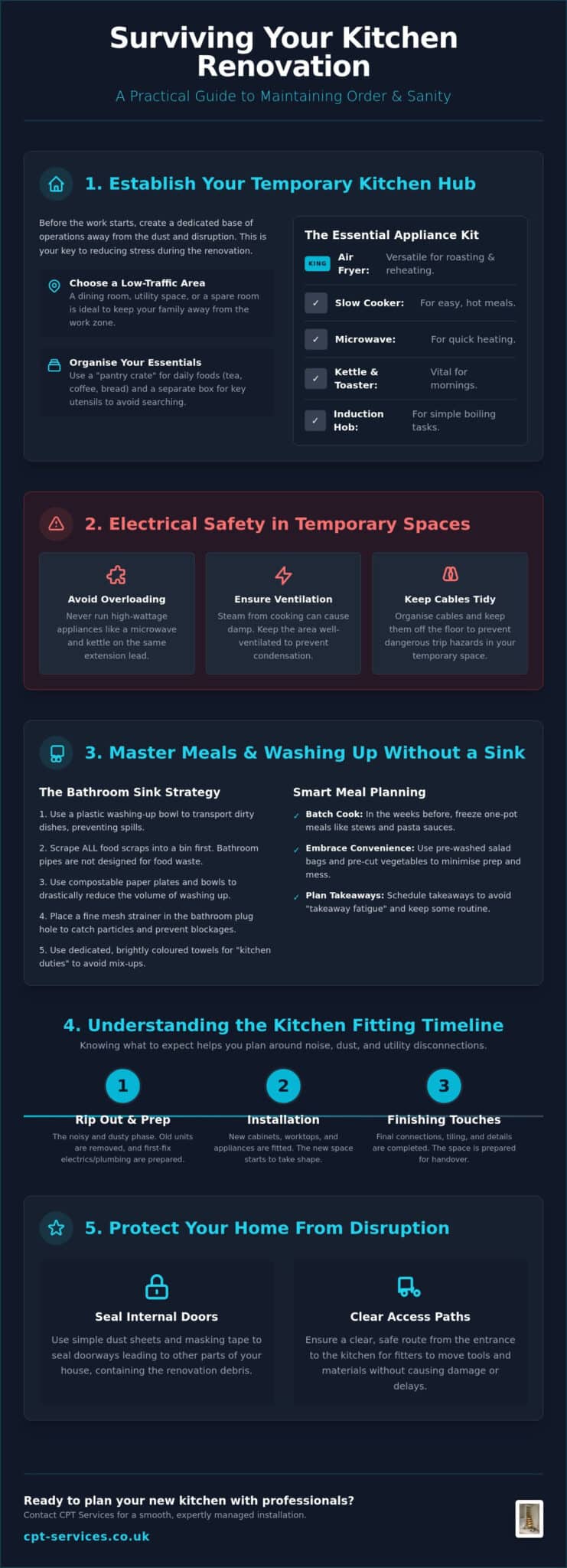
Setting up a dedicated base of operations before the old cabinets are removed is the most effective way to reduce stress. Deciding what to do while kitchen is being fitted involves more than just ordering takeaways; it requires a functional space where you can still feel at home. Choose a low-traffic area like a dining room or a utility space for your temporary hub. This keeps your family away from the dust and out of the fitters’ path. You need a sturdy surface, such as a folding table or an old desk, that can handle the weight and heat of portable appliances.
Planning exactly what to do while kitchen is being fitted starts with this temporary hub. A broader Understanding the Renovation Process helps you realise that your main cooking area will be out of bounds for at least a week. Organise a “pantry crate” for daily essentials like tea, coffee, cereal, and bread. Keeping these in one box prevents you from searching through packing crates for a teaspoon at breakfast time. It is also helpful to keep a separate box for frequently used utensils, a tin opener, and a sharp knife.
The Essential Appliance Kit List
The air fryer is the undisputed king of kitchen renovations. It handles everything from roasting vegetables to reheating leftovers with speed and efficiency. Combine this with a slow cooker to ensure hot, healthy meals are ready when you finish work. This requires minimal prep and no active stove time. A portable induction hob is also a wise investment for simple boiling tasks like pasta or eggs. Keep these essentials accessible:
- Kettle and toaster: These are vital for your morning routine.
- Microwave: Ideal for quick heating and pre-prepared meals.
- Slow cooker: Perfect for bulk cooking whilst the main oven is disconnected.
- Air fryer: A versatile tool that replaces many oven functions.
Electrical Safety in Temporary Spaces
Temporary setups often rely on extension leads in living centres or spare bedrooms. These circuits are not designed for the heavy electrical load of kitchen machinery. You should never run high-wattage appliances like a microwave and a kettle simultaneously on one lead. This can trip your breakers or cause the lead to overheat. Ensure your temporary area is well-ventilated. Steam from a kettle or slow cooker can quickly lead to dampness or condensation on windows in smaller rooms. Keep cables tidy and off the floor to prevent trip hazards in your temporary dining area.
Managing Meals and Washing Up Without a Kitchen Sink
The moment your old sink is disconnected is when the reality of the renovation truly hits home. For most Leicester families, the biggest challenge is not the lack of an oven, but the lack of a drain. Knowing what to do while kitchen is being fitted involves a shift in how you handle hygiene and food waste. You must accept the “bathroom sink” reality early on. To protect your sanity and your plumbing, invest in a stack of compostable paper plates and bowls. This significantly reduces the volume of washing up you need to carry upstairs, keeping your bathroom a place of relaxation rather than a scullery.
Managing food scraps is vital during this period. Bathroom pipes are typically narrower than kitchen waste pipes and lack the capacity to handle fats or solid debris. Always scrape plates thoroughly into a bin before they reach the basin. If you are feeling overwhelmed by the logistics, our team at CPT Services can explain the exact timeline of your kitchen installation to help you plan your meal schedule effectively.
The Bathroom Sink Strategy
Transporting dirty dishes through the house can lead to spills on carpets or flooring. Use a dedicated plastic washing-up bowl to move items to the bath or utility sink. You must use a hair-catcher or a fine mesh strainer in the plug hole. This prevents small food particles from causing a costly blockage in your bathroom plumbing. Allocate specific, brightly coloured towels for “kitchen duties” in the bathroom so they don’t get mixed up with your hand towels. This maintains a clear boundary between food prep and personal hygiene.
Smart Meal Planning for Renovations
Preparation is your best defence against the takeaway fatigue that often sets in by the fourth day. In the weeks leading up to the rip-out, focus on batch cooking one-pot recipes like stews or pasta sauces that can be frozen in flat bags. These take up less space and defrost quickly in a microwave. Utilise pre-washed salad bags and pre-cut vegetables from the supermarket to eliminate the need for chopping boards. This keeps your temporary surfaces clean and reduces the risk of cross-contamination.
Understanding what to do while kitchen is being fitted will help you stay organised during the most disruptive phase of the project. Whilst you should plan for treats from local Leicester favourites, having a freezer full of home-cooked meals ensures you maintain a healthy diet. This approach also helps with Dust and Site Safety by minimising the time you spend prepping food near the construction zone. Keeping your meal prep simple reduces the mess and the stress for everyone in the household.
Minimising Disruption: Dust, Noise, and Site Safety
Renovation dust is remarkably persistent. It finds its way into drawers and onto bookshelves in rooms far from the construction area. One of the most important things to consider when deciding what to do while kitchen is being fitted is how to contain this debris. Seal internal doors leading to the rest of the house using masking tape and heavy-duty plastic sheeting. This creates a physical barrier that keeps the majority of the fine particles within the work zone. You should also turn off any central heating or ventilation systems that might pull dust into your ductwork and spread it throughout the home.
Beyond physical barriers, managing air quality is essential for your comfort. Following Minimising Disruption: Dust, Noise, and Site Safety protocols ensures that your living environment remains healthy. Professional fitters often use dust extraction systems on their power tools to catch sawdust at the source. However, you should still move favourite furniture items and delicate electronics away from the entry path to prevent accidental damage or heavy soiling whilst the work is in progress.
Site safety is a priority for everyone. Create a clear thoroughfare from the front door or side gate directly to the kitchen. Remove rugs, plants, and side tables that might trip a fitter carrying a heavy worktop. During the installation, the kitchen becomes a high-risk area with exposed wires and sharp tools. It must be a strict “no-go” zone for children and pets. This prevents accidents and allows the team to work efficiently without interruptions or safety concerns.
Protecting Your Leicester Home
Clear the work area completely before Day 1. This includes emptying all cupboards and removing wall art from the kitchen and adjacent hallways. Use heavy-duty floor protection like Correx boards or adhesive carpet film in high-traffic areas. This is especially important for Leicester terrace homes where the route to the kitchen often passes through the main living space. Professional teams appreciate a clear site as it reduces the risk of damage to your property and allows for a faster installation.
Skip Placement and Access Logistics
Knowing exactly what to do while kitchen is being fitted includes managing the waste that comes out of the house. Leicester City Council’s bulky waste service does not accept construction materials like cupboards or worktops. You will need a skip or a licensed waste carrier to take debris to the Gypsum Close Trade Waste Facility. If you have space on your Leicester driveway, place the skip there to avoid the cost of a local council road permit. Discuss parking with your neighbours before the project starts. Providing a designated space for the fitters’ van close to your home allows them to access tools quickly and reduces the time spent moving heavy materials.
Understanding the Kitchen Fitting Order of Work
Understanding the sequence of events is the best way to manage your expectations. When you know which days will be the loudest, you can plan your time away from the house more effectively. A standard kitchen installation follows a logical order that ensures every component fits perfectly. This structure helps you decide what to do while kitchen is being fitted, such as when to book a desk at a local co-working space or when to plan a day trip out of Leicester.
- Day 1-2: The Rip-Out. This is the most disruptive phase. Expect heavy noise and significant dust as old units are removed. You will lose access to water and gas during these initial days.
- Day 3-5: 1st Fix. Electricians and plumbers move cables and pipes whilst the walls are open. This is the stage where the hidden infrastructure of your kitchen is modernised.
- Day 6-8: Carpentry and Cabinetry. The skeleton of your kitchen begins to take shape. Our fitters will secure the units to the walls and ensure everything is perfectly level.
- Day 9-12: Worktops and 2nd Fix. Appliances are connected and the sink becomes functional again. This is the moment your house starts feeling like a home again.
Why the 1st Fix is the Most Critical Stage
The 1st fix is where the precision happens. We confirm every socket position and appliance location before the plaster goes on or the cabinets are installed. It is vital to ensure your plan is followed to the millimetre. This stage represents the transition from a building site back to a recognisable room. If you have questions about the layout, this is the best time to speak with your lead fitter. Clear communication now prevents delays later in the project.
The Final Flourishes: 2nd Fix and Finishing
The 2nd fix involves connecting the heart of the kitchen. We install the oven, hob, and sink to make the space usable. After the main components are in place, we focus on the details that define a high-quality finish. This includes fitting cornices, pelmets, and plinths. We also conduct a thorough “snagging” process. A professional fitter stays on-site until every door is aligned and every seal is watertight. We take pride in our work and ensure the final result meets our rigorous standards.
If you are planning a renovation and want a reliable local team to handle the process, contact CPT Services for a straightforward discussion about your project.
Transitioning to Your New Kitchen with CPT Services
The final day of a kitchen refit is a significant milestone for any Leicester homeowner. After weeks of managing a temporary station and washing up in the bath, the sight of a functional, beautiful space is a massive relief. However, the transition involves more than just turning on the tap. Knowing what to do while kitchen is being fitted includes planning for the “move-in” phase. This is your opportunity to set up a workspace that is more efficient than the one you left behind. Our team at CPT Services focuses on making this handover as smooth as possible.
The CPT Services Approach to Cleanliness
We understand that our presence in your home is a disruption. Our team takes extensive measures to protect your property, whether we are installing a new kitchen or fitted wardrobes. We use dust sheets and floor protection as standard practice from the moment we arrive. We commit to leaving your home tidy at the end of every working day. Our local reputation in Leicester depends on this professional conduct. We believe that a clean site is a safe site, and we treat your home with the same respect we would our own.
Once the fitters leave the site, a final deep clean is necessary. Even with the best dust extraction tools, fine particles can settle in the hours after the work is finished. Wipe down the inside of every cabinet and drawer before you begin putting away your crockery. This is also the time to peel off any protective films from cabinet doors or appliances. By handling this methodically, you ensure your new investment looks its best from day one.
Moving Back In: A Fresh Start
Moving back into your kitchen is the perfect time for a thorough declutter. As you unpack your “pantry crates” and temporary storage boxes, evaluate every item. If you haven’t used a specific gadget in the last year, consider if it truly needs a place in your new bespoke cabinetry. Organise your cupboards based on workflow. Store heavy pans near the hob and frequently used mugs near the kettle. This creates a logical system that makes daily cooking a pleasure rather than a chore. Using local Leicestershire craftsmen ensures that your storage is tailored exactly to your needs, making this organisation much easier.
Check your new appliances immediately. Run a short cycle on the dishwasher and test every ring on the hob. Keep all your manuals and warranty information in a single, accessible folder. Understanding what to do while kitchen is being fitted ensures you are prepared for this final handover. Our goal is to minimise your “out of kitchen” time so you can get back to normal life as quickly as possible. We take pride in our efficiency and our commitment to quality execution.
Ready for a stress-free refit? Contact CPT Services for a kitchen consultation.
Ready for Your New Leicester Kitchen?
Upgrading your home is an exciting investment that adds value and improves your daily life. Success during the renovation depends on your preparation, from setting up a functional temporary hub to understanding the fitting timeline. By following these practical steps, you can maintain a sense of order and keep your household running smoothly whilst the work progresses. Knowing exactly what to do while kitchen is being fitted reduces the stress of the rip-out phase and helps you look forward to the final result.
At CPT Services, we bring over 12 years of local Leicestershire joinery expertise to every project. We specialise in bespoke craftsmanship for kitchens and bathrooms, providing a no-nonsense, reliable service that respects your home. Our clean-site guarantee ensures we leave your property tidy at the end of every day, minimising the impact on your family life. If you are ready to transform your space with a professional team you can trust, book your professional kitchen installation with CPT Services today. We look forward to helping you create a kitchen that you will enjoy for years to come.
Frequently Asked Questions
How long does a typical kitchen fitting take in the UK?
A standard kitchen installation in the UK typically takes between two and four weeks to complete. The exact duration depends on whether you are simply swapping units or making structural changes like moving walls and plumbing. Simple installations might be finished sooner, whilst bespoke projects with complex worktops or extensive tiling can take longer. We provide a clear timeline before we start so you can plan your schedule accordingly.
Will I be without water and electricity during the whole kitchen refit?
You will only experience service interruptions at specific stages of the project rather than the entire duration. Water and gas are usually disconnected during the rip-out on the first two days and again briefly when the new appliances are installed. Electricity is typically only turned off for short periods during the 1st and 2nd fix stages. We always aim to leave you with essential services at the end of each working day.
Can I leave my kitchen fitters alone in the house whilst I am at work?
Yes, it is very common for homeowners to leave a key or use a lockbox so the team can work whilst they are at the office. Professional fitters prefer a clear workspace where they can focus on the task without causing disruption to your daily routine. We establish clear communication from the start so you feel secure leaving your property in our hands whilst you go about your day.
Do kitchen fitters usually do the tiling and flooring as well?
Many professional fitters offer tiling and wooden flooring installation as part of a comprehensive service package. It is often more efficient to have one team handle the entire room to ensure a seamless finish and a coordinated timeline. You should always confirm the exact scope of work in your initial quote to ensure these finishing touches are included in the project plan from the start.
Should I move my fridge to another room during the renovation?
Moving your fridge to a dining room or utility area is a vital part of your temporary kitchen setup. This ensures you have constant access to fresh food and milk without having to enter the construction zone. It also protects the appliance from the heavy dust and debris generated during the initial rip-out phase. Ensure the new location has a flat surface and adequate ventilation for the motor.
How do I manage the dust that gets into my cupboards and drawers?
The best way to manage dust is to empty all cupboards and drawers in the kitchen and adjacent rooms before the work begins. Seal internal doors with masking tape and plastic sheeting to create a physical barrier. Whilst our team uses dust extraction on power tools to catch debris at the source, fine particles can still travel. Wiping down surfaces in nearby rooms daily is the most effective strategy.
Is it better to move out whilst the kitchen is being fitted?
Moving out is a personal choice, but most homeowners stay and use a temporary kitchen hub to save on costs. Deciding what to do while kitchen is being fitted often comes down to your tolerance for noise and temporary disruption. If you have very young children or pets, staying with relatives for the first few days of the rip-out can make the most intensive part of the process easier.
What should I do with my old kitchen units and appliances?
Old units and appliances should be removed using a skip or a licensed waste carrier. In Leicester, construction waste must be taken to the Gypsum Close Trade Waste Facility because the council’s bulky waste service does not accept kitchen cupboards or worktops. We can often help organise professional waste removal as part of our installation service to ensure your site stays clear, tidy, and safe throughout the project.